Field Guide · Nº 15
Round Rock
Dell's hometown grew into the north corridor's anchor — big-league schools, ballpark summers, and sensible prices.
← All neighborhood guides North & Northwest Suburbs · Updated July 2026
The feel of Round Rock
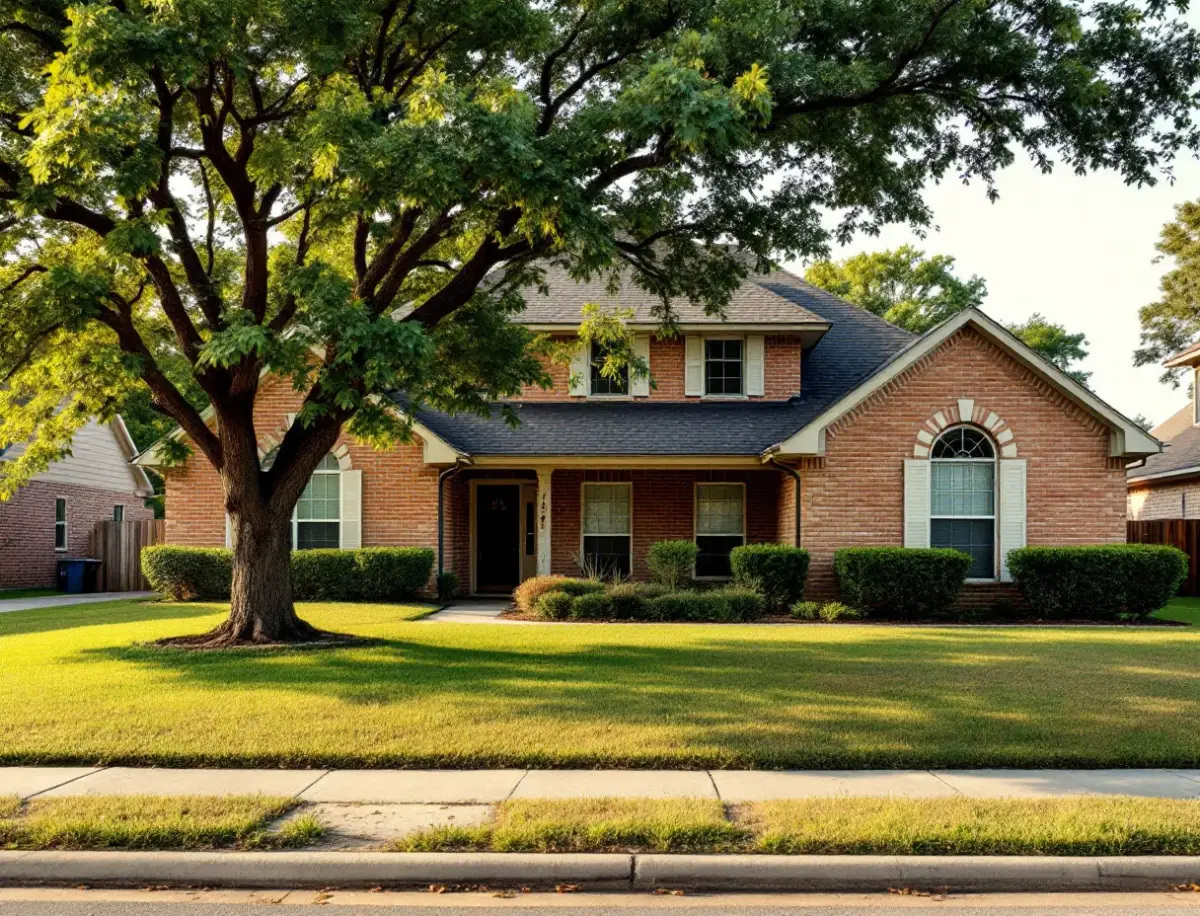
Round Rock is the grown-up of Austin’s northern suburbs. It boomed early — Dell put its headquarters here in the 1990s and changed the city’s trajectory — so unlike the newer boomtowns up the corridor, Round Rock has mature trees, established neighborhoods, a real employment base, and civic infrastructure that’s already built. The round rock itself still sits in Brushy Creek by the old Chisholm Trail crossing, and the small downtown along Main Street has quietly become pleasant, with restaurants and the original Round Rock Donuts, whose orange-glazed line on Saturday mornings is a legitimate local institution.
The city’s rhythm is family-oriented in a specific, unpretentious way: Round Rock Express baseball at Dell Diamond on summer nights, Kalahari Resort’s indoor waterpark for birthday parties, the Premium Outlets and IKEA drawing shoppers from three counties, and an enormous youth-sports economy. Nobody moves to Round Rock for the scene. People move here because the practical math — schools, jobs, house size, drive times — adds up better than almost anywhere else in the metro.
Who does it suit? Families optimizing for schools and space; Dell and north-corridor employees who want a ten-minute commute; and value-focused buyers who’d rather have an established neighborhood than a brand-new one. Who should think twice? Buyers who want urban energy, and anyone assuming “Round Rock” automatically means the most sought-after schools — zoning is street-specific, and we check it every time.
Schools
Round Rock ISD is the headline amenity, and its reputation is earned — it’s a large, high-performing district with standout campuses, and its tax rate is among the lowest in the region. Westwood High School (actually located near the Austin/Cedar Park edge of the district) is nationally ranked; Round Rock High, Stony Point, and Cedar Ridge each serve distinct zones with different profiles. The honest caveats: a district this size varies campus to campus, boundary adjustments happen as growth shifts, and the far-northeast parts of the city actually fall into neighboring districts (portions of Teravista, for example, are served by Georgetown or Hutto ISD depending on the section). We verify current attendance zones for the exact address on every home we show here — it’s the single most common surprise for relocating buyers.
The commute
Round Rock sits about 20 miles north of downtown Austin. Realistic drive times: 35–55 minutes to downtown depending on hour, via I-35 or the MoPac toll extension; 20–30 minutes to the Domain and the Parmer tech corridor; and 40–55 minutes to the airport, where SH 130/45 tolls are worth the money. The redeeming feature is that many residents don’t make the Austin drive at all — Dell’s Round Rock campus, two major hospital systems (Ascension Seton, Baylor Scott & White), Kalahari, and the retail corridor employ tens of thousands locally. If your job is in south Austin, though, be honest about what I-35 at 5:30 p.m. looks like before committing.
Property taxes and MUDs
Round Rock splits cleanly into two tax stories. Older established sections — Round Rock West, Old Town, Greenslopes, the Brushy Creek-adjacent neighborhoods annexed long ago — sit in city limits with no special district, and effective rates generally land around 1.8–2.0% of market value, helped by Round Rock ISD’s comparatively low rate (about $0.89 per $100 in the 2024–25 cycle). Newer master-planned communities financed their infrastructure through MUDs: Teravista and Paloma Lake are the notable examples, each with active MUD assessments that can push effective totals to roughly 2.2–2.6% depending on the district and year. The amenities those MUDs funded — golf, pools, trails, lake access at Paloma Lake — are real, but so is the monthly difference. MUD debt pays down over time, so we pull each district’s current rate rather than trusting an old listing figure, and we show clients the side-by-side payment math between a MUD and non-MUD home at the same price.
What you’ll find
The stock maps to the city’s growth rings. Closest in: 1970s–1980s ranches and two-stories on generous lots with mature live oaks, many updated, some original. The 1990s–2000s Dell-boom neighborhoods — brick two-stories, community pools, greenbelt lots along Brushy Creek — form the city’s broad middle. Then the 2000s–2010s master-planned communities: Teravista’s golf-course sections, Walsh Ranch, Paloma Lake’s namesake lake and trails. Per Redfin and Zillow public market data, mid-2026 — verify current: Round Rock’s median sale price runs roughly $370K–$425K depending on source and month, with older sections offering entry points near $300K and Teravista and Walsh Ranch commanding roughly $495K–$565K medians.
New construction in Round Rock
New construction inside Round Rock proper is limited — the city is largely built out — but it exists: final phases in northeast-side communities, townhome and small-lot projects near downtown and the Kalahari corridor, and scattered infill. National builders including Lennar, Pulte, and Taylor Morrison remain active on remaining sections, with more extensive new inventory just beyond the city line toward Hutto and Georgetown. Late-phase and spec-home purchases have their own dynamics — builders closing out a community negotiate differently than ones opening one, and incentive structures change month to month. We track which communities are in closeout, review the builder’s contract terms before you sign anything, and bring independent inspections to homes regardless of how new they are. Buyers comparing the north corridor should also weigh Pflugerville for value and Cedar Park for its west-side feel before settling on a lane.
The local's list
What we tell clients after the paperwork's signedGreen space & trails
- Brushy Creek Regional Trail — 10-plus paved and crushed-granite miles; locals start at Cat Hollow or the Play for All Park trailheads
- Old Settlers Park — 645 acres of ballfields, disc golf, a fishing pond, and the Rock'N River waterpark
- The actual round rock — the Chisholm Trail crossing marker sits midstream in Brushy Creek off Chisholm Trail Road; wade out at low water
Eat & drink
- Round Rock Donuts — orange-glazed originals since 1926; the Saturday drive-thru line moves faster than the lobby
- Salt Traders Coastal Cooking — the homegrown Gulf-seafood kitchen off I-35; campechana and wood-grilled redfish, arrive before the Friday rush
- Lamppost Coffee on East Main — the downtown coffee stop in the old Star Co space by Prete Plaza
Only-here bonuses
- Frontier Days at Old Settlers Park — Round Rock's July Fourth tradition, with the parade downtown and fireworks over the park
- Hairy Man Festival — the October homage to the Brushy Creek legend at Cat Hollow Park, delightfully odd and thoroughly local
- Round Rock Express at Dell Diamond — Triple-A summer baseball; Friday fireworks nights and lawn berm seats are the ritual
See it in person
Walk Round Rock with us
An hour on the ground tells you more than a week online. We'll show you the streets that fit your life — and tell you which ones don't.
Prefer to talk first? Call (512) 537-8623 or email contact@raresidential.com.
Keep exploring
If you like Round Rock, also look at
Georgetown
The most beautiful town square in Texas, ringed by the fastest-growing master-planned communities in the country.
Pflugerville
The northeast value play — real amenities, honest prices, and a front-row seat to the Tesla-Samsung corridor.
Cedar Park
The suburb that grew up — mature trees, top-rated schools, and everything already built.